PhD projects
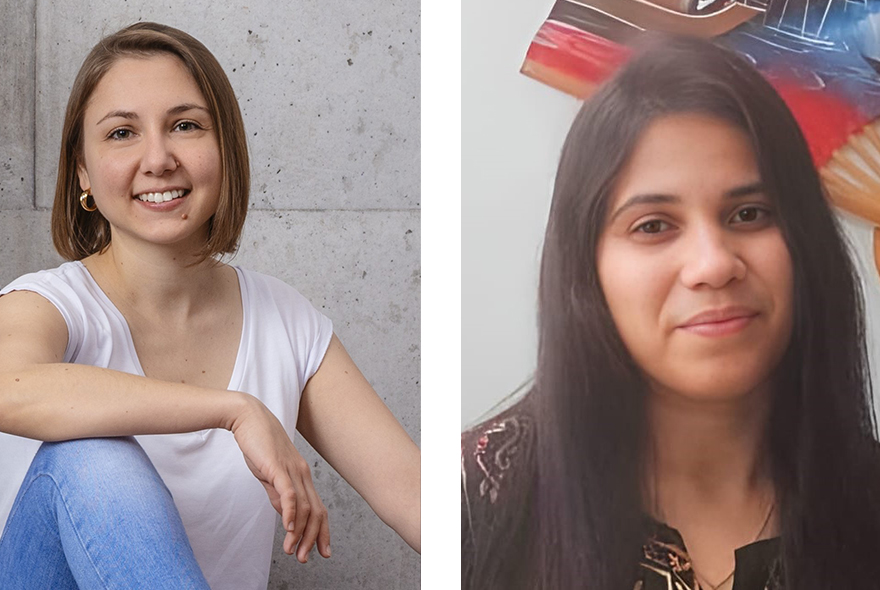
Daniela Beckmann finished her PhD at Martin Kerschensteiner’s lab focusing on Multiple Sclerosis (MS). “The long-term disability in multiple sclerosis (MS) is linked to neurodegeneration and axonal loss. Current treatments manage relapses but do not stop neuroaxonal degeneration, highlighting the need for neuroprotective therapies. Research using in vivo imaging in experimental autoimmune encephalomyelitis, an MS model, indicates that initial axonal damage can be reversible, influenced by intra-axonal calcium entering through "nanoruptures" in the membrane.
We hypothesized that interventions supporting calcium homeostasis could promote recovery and reduce axonal loss. However, attempts to overexpress calcium-binding proteins and pharmacologically activate the sodium-calcium exchanger did not succeed in reducing calcium levels or axonal damage.
Meanwhile, I explored the potential of using membrane "nanoruptures" for targeted pro-drug delivery, aiming to limit side effects by focusing on damaged axons. We developed a membrane damage sensor, applicable across various cell types, and published our findings in the Journal of the American Chemical Society. Initial efforts towards prodrug development have begun, but further work is still needed,” Daniela explains.
Vini Tiwari completed her PhD project at Mikael Simons Lab. “I studied the epigenetic regulation of microglia in aging and remyelination. The project was motivated by a key discovery from our lab in 2018: defective cholesterol clearance in aged phagocytes acts as a major barrier to remyelination in the central nervous system (CNS). This led us to investigate how age-related dysfunctions in innate immune cells affect the CNS’s repair capacity.
Microglia and macrophages respond to CNS damage through a variety of receptors, but aging causes microglia to lose their adaptability. To address this, we explored innate immune training and found that the Bacillus Calmette-Guérin (BCG) vaccine could rejuvenate aged CNS myeloid cells, partly via the HDAC1/2 pathway, promoting remyelination in LPC-induced demyelination model and published our findings in Immunity (Cell Press).
Our data indicate that age-related epigenomic changes impair microglial functions and that innate immune training can reverse these changes, restoring microglial responsiveness after demyelinating injury,” concludes Vini.
Postdoc life
Vini has successfully completed the interviews and travels and is now a postdoctoral researcher in Professor Christopher K. Glass's lab at the University of California, San Diego (UCSD). She explains, “My PhD research heightened my interest in the epigenetic control of macrophage function and its impact on their adaptability across different tissues and diseases. This drove me to explore the epigenetic mechanisms that regulate microglia plasticity in health and disease in the CNS. (CNS).”
Daniela is currently looking for a postdoc position. “I’m intrigued by how molecular pathways, organelles, and cell types interact to enable function, and how disruptions can lead to disease. I can’t think of a job that combines intellectual challenge and creativity with hands-on technical work as uniquely. Observing biology through a microscope is incredibly rewarding!”